Address
304 North Cardinal
St. Dorchester Center, MA 02124
Work Hours
Monday to Friday: 7AM - 7PM
Weekend: 10AM - 5PM
Address
304 North Cardinal
St. Dorchester Center, MA 02124
Work Hours
Monday to Friday: 7AM - 7PM
Weekend: 10AM - 5PM
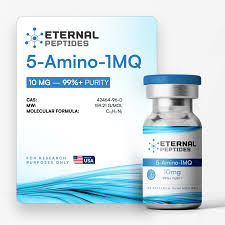
Price range: $110.00 through $350.00
ource ultra-pure 5-amino-1mq for metabolic research. Learn about 5 amino 1mq benefits, exact 5-amino-1mq dosage protocols, and tracking 5-amino-1mq side effects in cellular assays.
The modern biochemical exploration of metabolic syndromes, cellular energy expenditure, and skeletal muscle regeneration relies extensively on small molecules capable of modulating intracellular enzyme activity. Within contemporary obesity research and longevity science, the introduction of 5-amino-1mq has emerged as a groundbreaking milestone for investigators examining the reversal of diet-induced metabolic decline. Known chemically as 5-amino-1-methylquinolinium, this small molecule—frequently grouped by researchers alongside advanced 5 amino 1mq peptide configurations due to its target applications—functions as a potent, highly selective inhibitor of Nicotinamide N-methyltransferase (NNMT). Because raw metabolic signaling pathways are highly sensitive to enzymatic changes, acquiring high-purity 5 amino 1mq with verified analytical data is critical to obtaining clean, reproducible results. For university physiology departments and independent research centers across the United States, utilizing a standardized 5-amino 1mq compound is a foundational requirement to observe downstream cellular adjustments without causing unwanted variations in mammalian test models.
To properly deploy this compound within automated high-throughput screening arrays, laboratory technicians must thoroughly understand its underlying chemical profile and enzymatic targets. The structural architecture of 5-amino-1mq allows it to readily cross cellular membranes and directly access the cytoplasm of mature adipocytes and skeletal muscle cells.
The primary function of 5-amino 1mq is the targeted block of NNMT, an enzyme that converts nicotinamide (NAM) into S-adenosyl-L-methionine (SAM)-dependent methyl-nicotinamide (MNA). By stopping this specific step, 5-amino-1mq halts the wasteful usage of nicotinamide. This action allows the cell to funnel raw materials into the NAD+ salvage pathway, increasing intracellular nicotinamide adenine dinucleotide ($NAD^+$) concentrations. This spike in $NAD^+$ activates Sirtuin 1 (SIRT1) pathways, mimicking the cellular signaling patterns of intense calorie restriction and exercising muscle tissues without altering dietary intake.
When integrated into controlled in-vitro and in-vivo mammalian models, the documented 5 amino 1mq benefits cross multiple physiological systems, making it a highly versatile compound for endocrine research.
+-----------------------------------------------------------------------+
|                    5-AMINO-1MQ INTERNALL SIGNALING                    |
+-----------------------------------------------------------------------+
|                       [ 5-Amino-1mq Compound ]                        |
|                                  |                                    |
|                                  v                                    |
|                      Blocks NNMT Enzyme Action                        |
|                                  |                                    |
|         +------------------------+------------------------+           |
|         v                                                 v           |
|  Saves Intracellular NAD+                         Optimizes SAM/SAH   |
|         |                                             Ratios          |
|         v                                                 |           |
|  Activates SIRT1 Signaling                                v           |
|         |                                         Regulates Epigenetic|
|         v                                         Methylation Levels  |
|  [ Enhanced Fatty Acid Oxidation ]                                    |
+-----------------------------------------------------------------------+
Researchers monitoring fat tissue changes consistently observe key 5 amino 1mq benefits, such as a down-regulation of lipogenic genes and a major increase in GLUT4 glucose transporter deployment. Furthermore, studies on 5 amino 1mq peptide assays highlight a marked reduction in cell sizes within white adipose tissue. This structural change shifts fat cells toward a high-energy state that actively burns lipids via uncoupling protein 1 (UCP1) activation, providing deep insights into correcting metabolic dysfunction.
Establishing a reliable, weight-adjusted 5-amino-1mq dosage is essential for maintaining strict baseline testing controls and avoiding receptor saturation in animal models. Because this compound is a small molecule rather than a traditional peptide, calculating a 5 amino 1mq dosage requires specific volumetric mapping based on daily metabolic turnover rates.
In standardized animal research models, an effective 5-amino-1mq dosage typically ranges between $20\text{ mg/kg}$ and $30\text{ mg/kg}$ of body weight per day, administered via controlled oral gavage or systemic fluid integration. When mapping out a long-term 5 amino 1mq dosage schedule, researchers often space out administration times to align with natural circadian metabolic rhythms. This steady delivery maintains a uniform concentration of the compound in the blood, preventing sharp spikes or drop-offs that could skew data in long-term metabolic studies.
While the compound shows excellent safety traits due to its targeted enzyme blocking, monitoring possible 5 amino 1mq side effects remains a core requirement for sound science. Potential cellular 5-amino-1mq side effects include transient drops in localized methylation profiles if SAM/SAH balance shifts too quickly. To help technicians spot and track these shifts, the table below outlines key cellular indicators associated with monitoring 5 amino 1mq side effects in the lab:
| Monitored Cellular System | Potential Assay Shift | Observed Lab Biomarker Indicator |
| Methyl Pool Balance | Minor SAM/SAH Ratio Adjustments | Epigenetic Histone Methylation Assays |
| NAD+ Flux Rates | Sudden Acceleration of SIRT1 | Elevated Intracellular ATP/NAD+ Ratios |
| Myocyte Homeostasis | Initial Alteration in Glycolytic Speed | Lactic Acid and Glucose Depletion Rates |
By proactively identifying these biological indicators, your laboratory can confidently separate the primary therapeutic responses from secondary 5-amino-1mq side effects, keeping your published findings accurate and fully protected.
Within the competitive United States biochemical supply landscape, maintaining absolute purity is the most critical benchmark for protecting experimental validity. Our premium 5-amino-1mq research compounds are synthesized via automated solid-phase platforms and audited using High-Performance Liquid Chromatography (HPLC) to guarantee an absolute chemical purity threshold of 98% or higher. This strict manufacturing control ensures that each batch is completely free of structural isomers, synthesis residues, or ambient bacterial endotoxins. By choosing to source this premium NNMT inhibitor as a fully certified research asset, your facility eliminates unmonitored chemical variables, protects sensitive laboratory equipment, and enhances the scientific authority of your final published data.
| Volume | 3, 6 |
|---|---|
| Quantity | 5mg10vials, 50mg10vials |





Reviews
There are no reviews yet.