Address
304 North Cardinal
St. Dorchester Center, MA 02124
Work Hours
Monday to Friday: 7AM - 7PM
Weekend: 10AM - 5PM
Address
304 North Cardinal
St. Dorchester Center, MA 02124
Work Hours
Monday to Friday: 7AM - 7PM
Weekend: 10AM - 5PM
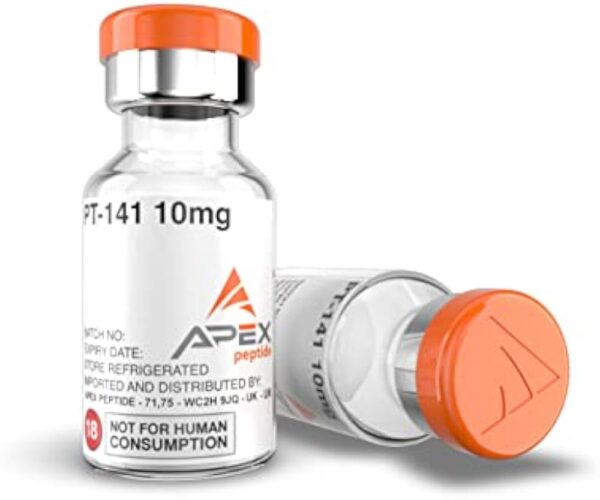
Original price was: $300.00.$275.00Current price is: $275.00.
ource ultra-pure Pt-141 Peptide Injection components. Master accurate administration dynamics, receptor pathways, and proper handling of pt 141 peptide injections in laboratory assays.
The study of central nervous system pathways, reproductive physiology, and microvascular signaling relies on stable synthetic melanocortin receptor agonists like Bremelanotide, a cyclic heptapeptide analog of alpha-melanocyte stimulating hormone. Researchers are focusing on pt 141 peptide injections to observe non-vascular physiological responses in animal models, as these injections target the central nervous system rather than relying on local pathways that use nitric oxide donors. Proper preparation, optimal injection site selection, and adherence to laboratory safety protocols are crucial for obtaining clean and reproducible data from these clinical compounds, which are delivered vacuum-sealed and freeze-dried to maintain their chemical integrity.
To properly integrate this compound into automated testing frameworks, laboratory technicians must evaluate its underlying chemical profile and specific binding targets. The molecular structure of a pt-141 peptide injection features a highly stable cyclic ring ($Ac-Nle-cyclo[Asp-His-D-Phe-Arg-Trp-Lys]-OH$) derived from the active metabolite Melanotan 2, but modified by replacing a C-terminal amide with a hydroxyl group to isolate its biological pathways.
When introduced into a tissue matrix, the molecule bypasses direct vascular tissue to bind with high affinity to central melanocortin receptors, specifically MC3R and MC4R. This binding triggers a signaling cascade in the hypothalamus, activating secondary dopaminergic pathways that prompt downstream physiological changes in animal models. These precise brain-to-tissue signaling pathways make the pt 141 peptide injection an essential control molecule for tracking hypothalamic signaling shifts, examining neural pathway fatigue, and studying blood pressure impacts without inducing off-target skin pigmentation.
Transitioning a highly concentrated, freeze-dried peptide cake into an evenly mixed liquid solution requires strict compliance with volumetric laboratory guidelines. The table below outlines standard dilution parameters using sterile bacteriostatic water for a $10\text{ mg}$ research vial:
| Diluent Volume Added | Resulting Concentration Per Milliliter | Milligrams per 0.1 mL (10 Units) |
| 1.0 mL | $10.0\text{ mg/mL}$ | $1.0\text{ mg}$ |
| 2.0 mL | $5.0\text{ mg/mL}$ | $0.5\text{ mg}$ |
| 4.0 mL | $2.5\text{ mg/mL}$ | $0.25\text{ mg}$ |
When planning in-vivo or ex-vivo tissue transport experiments, setting up an accurate, clean pt 141 peptide injection site profile is critical to ensure proper absorption and maintain consistent data across animal test groups.
In animal testing models, a subcutaneous pt 141 peptide injection site is selected in areas with rich adipose tissue layers, such as the lower abdominal region or the thigh envelope, while completely avoiding vascular networks or muscular layers. Choosing a consistent pt 141 peptide injection site minimizes variable absorption rates, protects local tissue from localized stress, and ensures the active compound reaches the bloodstream smoothly to engage central receptors accurately.
Establishing a step-by-step Standard Operating Procedure (SOP) on how to inject pt 141 peptide safely prevents mechanical stress on the compound and ensures precise volume delivery for testing.
Following these guidelines for how to inject pt 141 peptide ensures your laboratory maintains uniform testing conditions across all research subjects.




Reviews
There are no reviews yet.