Address
304 North Cardinal
St. Dorchester Center, MA 02124
Work Hours
Monday to Friday: 7AM - 7PM
Weekend: 10AM - 5PM
Address
304 North Cardinal
St. Dorchester Center, MA 02124
Work Hours
Monday to Friday: 7AM - 7PM
Weekend: 10AM - 5PM


Price range: $140.00 through $320.00
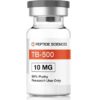
Enhance your cellular migration and actin-binding assays with premium Thymosin Beta 4 TB 500 lyophilized vials. Synthesized to a strict purity standard of 98%+, this highly stable compound is an essential tool for evaluating angiogenesis, endothelial cell motility, and wound healing kinetics in vitro.
The biological investigation of cellular migration, endothelial tissue differentiation, and soft-tissue recovery pathways relies heavily on low-molecular-weight actin-binding signaling proteins. Within modern laboratory biochemistry, tb 500 thymosin beta 4 stands out as one of the most critical and extensively evaluated research tools. Naturally present in high concentrations within blood platelets and wound fluid, this endogenous peptide coordinates cellular responses following tissue trauma. Because commercial laboratory assets are distributed as vacuum-sealed, freeze-dried cakes to ensure long-term stability, understanding structural nomenclature and reconstitution variables is essential for generating clean analytical data. For university biochemistry departments and independent laboratories throughout the United States, utilizing verified, ultra-pure tb 500 thymosin beta 4 is a foundational requirement for analyzing systemic cell dynamics and vascular remodeling.
When designing a complex tissue assay, researchers often encounter varied terminology regarding these regenerative proteins. To avoid experimental errors or baseline data miscalculations, technicians must analyze the structural traits separating hymosin beta 4 vs tb 500 or thymosin beta 4 vs tb-500 references.
The distinction in the hymosin beta-4 vs tb-500 profile lies in the total amino acid count. Full-length Thymosin Beta-4 is a complete 43-amino-acid peptide that occurs naturally in human tissue, playing a vital role in actin sequestration and cell migration.
Conversely, tb-500 thymosin beta-4 typically refers to a short, synthetic 7-amino-acid fragment (specifically the $LKKTETQ$ sequence, corresponding to residues 17-23). This localized fragment contains the exact active domain responsible for actin binding, cell movement, and angiogenesis. Because the shorter sequence is easier to synthesize to a high purity standard and exhibits superior stability in solution, investigators looking to isolate specific repair mechanisms frequently map the distinct biochemical paths of tb 500 vs thymosin beta 4 or evaluate combined thymosin beta 4 tb 500 metrics in vitro.
+-----------------------------------+-----------------------------------+
| Compound Type                     | Amino Acid Chain & Purity Profile |
+-----------------------------------+-----------------------------------+
| Native Thymosin Beta-4            | Full 43-amino-acid peptide chain  |
+-----------------------------------+-----------------------------------+
| Synthetic TB-500 Fragment         | Core 7-amino-acid active fragment |
|                                   | (Residues 17-23; LKKTETQ)         |
+-----------------------------------+-----------------------------------+
In the biomedical supply sector, evaluating peer-reviewed data is crucial for protecting testing parameters. Documented safety trials in international registries look directly at how the parent molecule influences chronic non-healing wounds and corneal ulcers.
Reviewing a thymosin beta-4 tb-500 human clinical trial randomized study shows that while full-length Thymosin Beta-4 has advanced into Phase II human trials for dermal stasis and pressure ulcers—showing accelerated healing timelines—the shorter synthetic fragment remains primarily within pre-clinical animal models and in vitro testing environments. These clinical summaries reinforce that while the underlying cellular mechanisms are nearly identical, the data pool for the full-length protein cannot simply be applied directly to the fragment without careful laboratory control.
Transitioning a lyophilized peptide cake into a usable liquid solution requires strict compliance with clean laboratory guidelines to protect the structural integrity of the active sequence. Reviewing established mixing protocols ensures proper dissolution without exposing the delicate amino acid bonds to mechanical damage.
Within the competitive United States biochemical landscape, validating structural purity is the single most critical factor in protecting experimental validity. Our premium Thymosin Beta 4 TB 500 research vials are synthesized using automated solid-phase techniques and audited via High-Performance Liquid Chromatography (HPLC) to guarantee an absolute chemical purity threshold of 98% or higher. This rigorous quality control ensures that each vial is completely free of truncated sequences, synthesis residues, or environmental bacterial endotoxins. By integrating verified research components into your facility’s testing matrix, you remove unmonitored chemical variables, protect your equipment investment, and ensure the accuracy of your final published data.
| Volume | 5mg, 10mg |
|---|---|
| Quantity | 2, 4 |



Reviews
There are no reviews yet.